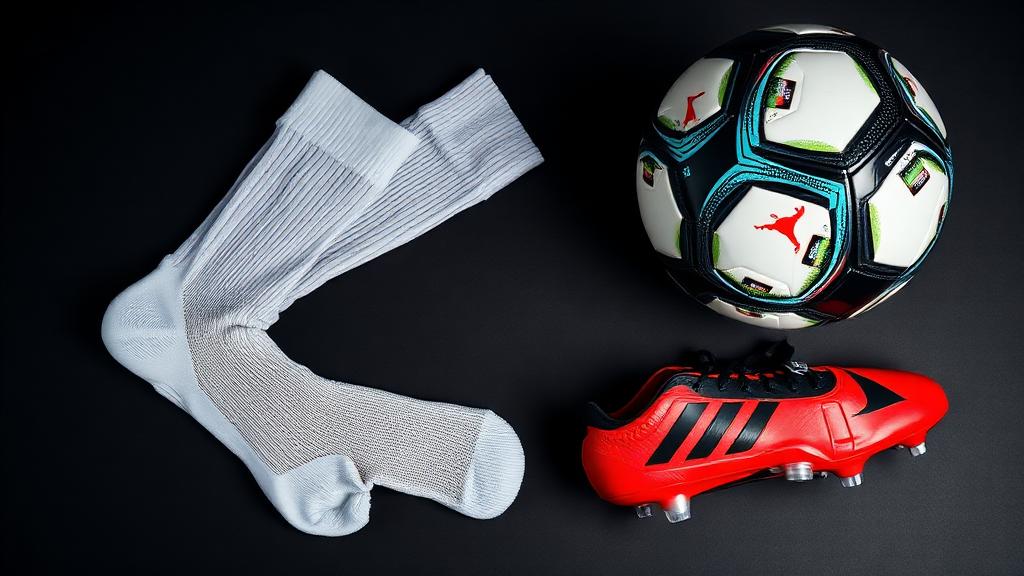
As an academy owner or director, you scrutinize coaching methodologies, player pathways, and facility upgrades, but often overlook the single most consistent point of contact for your players: their gear. The subtle, cumulative effect of substandard equipment is a silent inhibitor of technical development and a direct reflection on your program's perceived quality. This guide breaks down why professional-grade soccer socks, precision size 5 balls, and appropriate cleats are not luxury add-ons but foundational tools for building elite players ahead of the 2026 World Cup spotlight.
Quick Answer
For serious player development, especially at the U13+ level, elite gear is non-negotiable. A thermally bonded, FIFA-certified size 5 soccer ball ensures consistent touch and flight, professional soccer socks with grip technology prevent in-cleat slippage for better power transfer and stability, and model-specific firm ground soccer cleats like the Adidas Predator are engineered for optimal traction and control. Standardizing this level of equipment is a key differentiator for top-tier academies serious about performance.
The 5 most common mistakes (and how to fix them)
In the competitive landscape of American youth soccer, the margins for error are shrinking. While we obsess over tactical periodization and player analytics, fundamental errors in equipment selection can undermine our best efforts on the training ground. These are not minor details; they are persistent, daily factors that shape muscle memory, motor skills, and a player's very perception of the game. Here are the five most common gear-related mistakes we see academies make—and the operational fixes to elevate your program.
Mistake 1: Treating Gear as a Simple Revenue Stream
What goes wrong: Many academies view the mandatory uniform and gear package as a simple fundraising mechanism or a branding exercise. The decision-making process is dominated by a single metric: finding the lowest-cost supplier for a bulk order of jerseys, shorts, and socks, with the ball often being an afterthought left to parents. This approach floods your training sessions with cheap, promotional-grade balls with poor water retention and unpredictable flight paths. It also results in players using generic, ill-fitting tube socks that offer zero performance benefits. The academy gets a slightly higher margin on the gear package, but at the cost of inconsistent training quality and an increased risk of nagging injuries like blisters and foot instability.
The fix: Shift your mindset from "gear as a commodity" to "gear as a developmental tool." Reframe the conversation internally and with parents. Your gear package is part of the curriculum. The added $15-$20 cost for a thermally bonded training ball isn't an upsell; it's an investment in thousands of consistent, quality touches over a season. Partner with brands or team dealers who can provide quality tiers. For example, instead of a generic polyester sock, specify a model with arch and ankle compression and a padded footbed. This commitment to quality communicates a level of seriousness that resonates with dedicated parents and players, justifying a higher price point by tying it directly to on-field benefits.
Mistake 2: Ignoring the Physics of a High-Quality Size 5 Soccer Ball
What goes wrong: A U14 player touches the ball hundreds of times in a single practice. When they are using a cheap, machine-stitched ball with a rigid plastic cover and a low-grade rubber bladder, they are building bad habits. These balls are often oversized or undersized, have hard spots, and absorb water, making them heavy and unpredictable. Players unconsciously learn to strike the ball harder than necessary, alter their receiving technique to cushion an erratic bounce, and struggle to develop a feel for generating spin. When these players then enter a higher-stakes game—an ECNL showcase, an MLS NEXT qualifier—and are introduced to a FIFA Quality Pro ball like the Adidas Oceaunz or Nike Flight, they are at a technical disadvantage. The ball feels "lively" or "uncontrollable" because their entire technical foundation was built on a substandard piece of equipment.
The fix: Standardize your academy's training ball to, at a minimum, a NFHS-approved, thermally bonded model. Educate yourself and your coaches on the difference. A thermally bonded ball has a seamless surface, which prevents water uptake and provides a perfectly spherical shape for true flight. A butyl bladder, common in top training balls, offers superior air retention compared to the latex bladders in high-end match balls (which require more frequent inflation but offer a softer touch). For your elite teams (U15+), consider making a FIFA Quality or Quality Pro certified ball the standard. The investment ensures that every training session replicates the conditions of a top-level match, removing equipment variables and allowing players to focus purely on technique.
Mistake 3: Underestimating the Critical Role of Performance Soccer Socks
What goes wrong: It sounds trivial, but the interface between the foot, the sock, and the cleat is critical for performance. Standard-issue cotton or thin polyester socks create a low-friction environment inside the shoe. With every cut, jump, and strike, the foot slides micro-millimeters within the cleat. This slippage leads to a cascade of negative effects: energy loss on power shots, reduced stability during changes of direction, and the most common complaint—blisters. Players consciously or subconsciously hold back to avoid discomfort or instability. For an operator, this means your players are not performing at 100%, and you are dealing with more preventable, minor injuries that disrupt training.
The fix: Mandate a true performance soccer sock as part of your uniform kit. This doesn't necessarily mean top-of-the-line grip socks like TRUSOX for every player, though they are an excellent option for top teams. Look for socks from major brands like Adidas or Nike, or specialists like TCK, that feature specific technologies. Key features to demand are: an anatomical fit (designated left and right socks), compression bands around the arch and ankle for support and improved proprioception, and strategically placed cushioning. Many modern socks, even at the team level, now incorporate yarns with a higher coefficient of friction or discreet grip elements in the sole to reduce slippage. This single, small upgrade provides a more secure foot lockdown, translating to better power transfer, increased confidence in movement, and happier, blister-free players.
Mistake 4: A One-Size-Fits-All Approach to Firm Ground Soccer Cleats
What goes wrong: An operator tells parents their child needs "cleats." The parent, trying to do the right thing, goes to a big-box store and buys a pair of soccer cleats that may or may not be appropriate for the surfaces your academy uses. The most common error is a mismatch between stud pattern and playing surface. Using Firm Ground (FG) cleats with aggressive bladed studs on an artificial turf (AG) field can lead to excessive grip, increasing the rotational torque on the knee and ankle and heightening injury risk. Conversely, using conical AG studs on a lush, slightly soft natural grass pitch can lead to slippage. Furthermore, not all FG cleats are the same. A center back needing stability has different footwear needs than a winger who requires lightweight responsiveness.
The fix: Educate, educate, educate. Use your website, registration process, and parent meetings to provide specific guidance on footwear. Acknowledge that you primarily play on natural grass (FG) or turf (AG) and explain what that means for cleat selection. Go a step further and explain the archetypes of modern cleats. For example, the Adidas Predator soccer cleats line (like the Accuracy or the upcoming 2024 model) is designed with rubber elements on the upper to enhance grip and spin on the ball, making it ideal for playmakers and strikers focused on control and power. In contrast, a line like the Nike Mercurial is built for speed. By providing this context, you empower parents to make better choices and demonstrate your club's deep understanding of every aspect of player performance.
Mistake 5: Failing to Mandate and Enforce a Professional Gear Standard
What goes wrong: A lack of clear, enforced standards creates a visually and functionally chaotic training environment. One coach has a bag of pristine, fully inflated Adidas training balls. The next field over, players are chasing a mix of worn-out promotional balls, a random futsal ball, and a deflated hand-me-down from an older sibling. This inconsistency signals to players, parents, and visiting scouts that the club culture is lax. It complicates coaching—how can you run a passing drill effectively when every ball behaves differently? It creates a visible hierarchy between the "haves" who can afford premium gear and the "have-nots," fostering division rather than a unified team identity.
The fix: As the operator, you must set the standard. The most effective method is to integrate all essential gear into your required registration package, managed through a streamlined ordering portal (many registration systems offer this, or you can use a service like Soccer.com's Team Store). This ensures every single player in an age group has the exact same quality of ball, the same performance socks, and the same training kit. It removes parent guesswork and non-compliance. You can frame this as a key part of your academy’s identity, using the 2026 World Cup as a rallying cry: "To build a professional pathway, we must train in a professional environment, and that starts with our equipment." This isn't about being restrictive; it's about eliminating variables and building a culture of excellence from the ground up.
Comparison of Youth Soccer Gear Standards by Level
Understanding the appropriate gear for each developmental stage is crucial for academy directors. This table outlines the typical standards, providing a clear pathway for equipment upgrades as your players and program advance.
| Gear Component | Recreational / Grassroots (U6-U12) | Competitive / Travel (U13-U18) | Pre-Professional (ECNL, MLS NEXT, GA) |
|---|---|---|---|
| Size 5 Soccer Ball (U13+) | Machine-stitched, PVC/TPU cover, basic rubber bladder. Focus is on affordability and durability. | Thermally bonded or high-quality stitched, PU cover, butyl bladder for air retention. NFHS approved. Consistent performance is key. | FIFA Quality or FIFA Quality Pro certified. Thermally bonded, textured surface for aerodynamics. The exact match ball used in league play. |
| Soccer Socks | Basic knit or cotton tube sock. Often part of a low-cost kit. Primary function is to cover shin guards. | Anatomical (L/R) fit with polyester/spandex blend. Features arch/ankle compression and a cushioned footbed. Focus on fit and comfort. | High-performance synthetic with integrated grip technology on the sole (e.g., NikeGrip, Trusox) to eliminate foot slippage inside the cleat. |
| Firm Ground (FG) Cleats | Entry-level synthetic upper, basic conical stud pattern. Focus on fit and safety. Brand is less important than proper sizing. | Mid-tier models (e.g., Adidas Predator .2/.3 tiers) with some tech features from the top model. More specific stud shapes (bladed/chevron). | Elite/pro-level models (e.g., Adidas Predator Elite, Nike Phantom) with premium upper materials, lightweight soleplates, and advanced stud configurations. |
| Player Training Environment | Parents typically responsible for providing a ball. Gear is inconsistent across the team. | Academy may recommend a specific training ball. Uniform socks are standard, but quality varies. | Academy mandates and often provides the exact training ball and socks for every player to ensure 100% consistency and professionalism. |
How to Apply This at Your Academy
Translating these principles into action requires a systematic approach. Here are actionable steps you can take to upgrade your academy's gear standards and culture:
- Conduct a Full Gear Audit: Before the next season, take inventory. What ball is being used in every training session across every age group? What socks are in your uniform package? Survey your coaches on gear-related issues they face. Gather this data to identify your biggest gaps between your current state and a professional standard.
- Build a Tiered Gear Strategy: You don't need to put U9s in $170 cleats. Develop a multi-year, tiered gear requirement plan. For example: Year 1, mandate a specific NFHS-approved thermally bonded training ball for all U13+ teams. Year 2, upgrade the required sock in your uniform kit to one with anatomical fit and compression. This phased approach makes the change more manageable financially for you and your families.
- Develop and Distribute Educational Resources: Don't just send a list of required items. Create a "Gear Philosophy" page on your website or a one-page PDF included in the registration packet. Use clear graphics and simple language to explain why a bonded ball helps first touch and why performance socks prevent blisters. Demonstrating this expertise builds trust and justifies any increase in cost.
- Leverage Technology for Enforcement and Compliance: The easiest way to ensure compliance is to control the point of sale. Partner with a team dealer like Soccer.com, Dick's Team Sports, or a local soccer shop to create a mandatory, all-inclusive kit that parents purchase directly through a custom web portal. Your club management and registration systems may already have integrations for this. This streamlines logistics, guarantees every player has the right equipment, and presents a unified, professional image from day one.
Frequently Asked Questions
What is the difference between a cheap size 5 soccer ball and an expensive one?
The primary differences are in construction, materials, and certification. A cheap, $15 ball is typically machine-stitched with a hard PVC cover and a low-quality bladder that loses air quickly. An expensive, $100+ size 5 soccer ball is usually thermally bonded (seamless), has a soft-touch, textured polyurethane (PU) cover for better grip and aerodynamics, and contains a high-performance bladder for superior feel and air retention. It will also often carry a FIFA Quality or Quality Pro stamp, certifying it has passed rigorous tests for weight, circumference, roundness, bounce, and water absorption.
Do professional soccer players really wear special soccer socks?
Yes, absolutely. Gone are the days of simple cotton tubes. Professionals almost universally wear highly engineered socks. Many use socks with integrated grip pads or textures on the sole (like NikeGrip technology or brands like TRUSOX) to lock their foot into their cleat, preventing slippage and maximizing power transfer. These socks also feature anatomical left/right fits, targeted compression for blood flow and support, and advanced moisture-wicking synthetic fabrics.
Why are Adidas Predator soccer cleats so popular for firm ground?
The Adidas Predator line has a long history, dating back to the 90s, of being synonymous with control and power. Modern Predator soccer cleats continue this legacy. Their defining feature is the use of strategically placed rubber elements or textured zones on the upper. This technology is designed to increase friction between the cleat and the ball, allowing players to impart more spin for curling shots and have a more "grippy," controlled first touch. Their stud patterns on firm ground (FG) models are typically a hybrid of bladed and diamond-shaped studs, engineered for a balance of rotational agility and aggressive traction for acceleration and shooting.
How often should a competitive youth player replace their soccer gear?
Industry observation suggests the following replacement cycle for a player training 3-4 times a week: Cleats should be replaced every season, or potentially twice a season if the player has a significant growth spurt. A high-quality training ball should last a full year, but inspect it for tears or loss of shape. Performance socks should be treated like any athletic sock and replaced when they lose elasticity or develop holes, likely needing a few new pairs each season. Shin guards are durable but should be replaced if they crack or the foam backing degrades.
Can wearing the wrong soccer socks cause injuries?
While they may not cause a major trauma like a torn ACL directly, the wrong socks are a significant contributing factor to nagging, performance-inhibiting issues. The primary problem is blisters, caused by friction from the foot sliding inside the cleat. A painful blister can alter a player's gait and mechanics, potentially leading to compensation injuries. Furthermore, a foot that is not secure within a cleat is less stable, which industry experience suggests could increase the risk of minor ankle rolls during quick changes of direction.
Is a FIFA Quality Pro ball necessary for a U14 team?
It is not strictly necessary, but it is highly aspirational and beneficial for top-level teams. A FIFA Quality Pro ball represents the pinnacle of performance, the same ball used in the World Cup and top professional leagues. While a high-quality, thermally bonded NFHS-approved ball is more than sufficient for excellent training, introducing a FIFA Quality Pro ball standardizes the environment to what players will face in top-tier showcases and national competitions. It's a statement of intent, preparing players mentally and technically for the next level by removing any equipment-related surprises.
Elevating your gear standards is not an ancillary expense; it is a direct investment in your players' long-term technical development and a powerful statement about your academy's commitment to excellence.