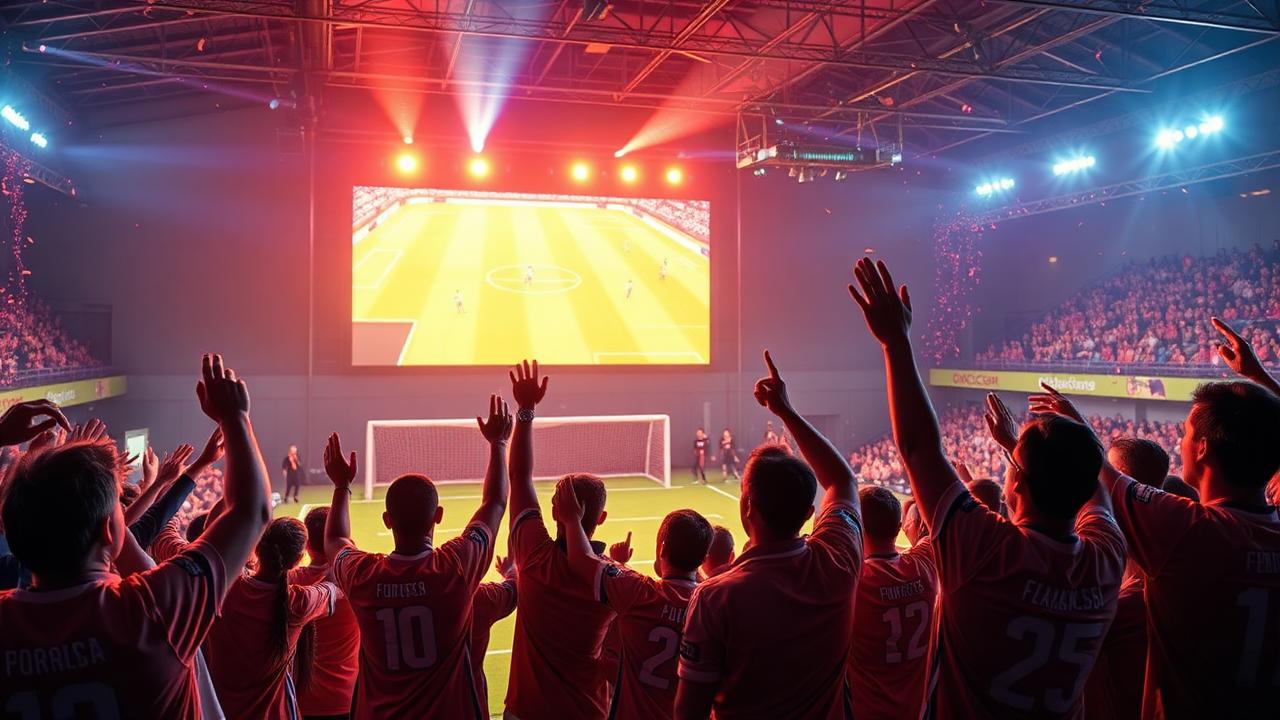
If you own an indoor soccer facility, a turf field with a clubhouse, or any space with at least 3,000 square feet and a wall you can project on, you're sitting on one of the most underrated revenue opportunities of summer 2026.
The 2026 World Cup runs 39 days and includes 104 matches. By rough match-window math, that's more than 250 hours of premium live programming from June 11 to July 19. Sports bars and breweries already know this. They've been booking up since November 2025. What sports bars don't have, and what you do, is a soccer audience that already knows your name, trusts your staff, and will choose your venue specifically because it's a soccer venue.
This is the field-owner's playbook for converting your facility into a watch-party revenue machine — without quitting your day job, blowing your budget on AV gear, or running afoul of FIFA's licensing rules.
Why a soccer facility beats a sports bar (for this specific event)
The instinct is to think you're competing with established sports bars. You're not — you're offering something they structurally can't.
- Captive soccer audience. Your member list is already self-selected. A blanket email to your league players, academy parents, and adult pickup database has 5–10x higher open rates than a sports bar's social-media-only reach.
- Family-friendly venue. Sports bars have a 21+ problem during day matches. You don't. A 9 a.m. or noon ET kickoff in a sports bar is empty; in your facility, it's a kids-and-parents goldmine.
- Branded loyalty. Every watch-party attendee becomes a future league registration, camp signup, or party rental. The bar gets the beer revenue. You get a customer for the next decade.
- Lower fixed cost. Bars have to break even on staff and inventory every night. You're already paying rent. Watch parties are pure marginal revenue.
The 2026 schedule: which match windows actually drive demand
Not every match is a paying event. Plan around these tiers:
| Tier | Match windows | Expected attendance | Pricing strategy |
|---|---|---|---|
| S-Tier | USA group-stage matches; Mexico group-stage matches; the Final (July 19); Semifinals (July 14–15) | Capacity or near-capacity | Premium ticketed ($25–40 GA, $75+ premium) |
| A-Tier | USA/Mexico/Canada knockout matches; England, Brazil, Argentina, France group matches; all quarterfinals | 50–80% of capacity | Standard ticket ($15–25) |
| B-Tier | Major nations vs. minor nations in group stage; weekend afternoon slots | 30–50% of capacity | Free entry + F&B model, or low cover ($5–10) |
| C-Tier | Weekday morning kickoffs; matches between two non-marketable nations | Walk-up only | Free, doors open, drive social proof |
If your area has a strong diaspora community for a "minor" nation in the tournament, that match jumps two tiers immediately. A Senegal vs. Iran match is C-tier in most of America and S-tier in specific neighborhoods of Brooklyn, Detroit, or Houston. Map this to your local demographics before you finalize pricing.
The licensing reality check (read this before you sell a ticket)
This is the part that gets glossed over in every "host a watch party" blog. FIFA enforces "Public Viewing" rights for the World Cup. Here's the practical breakdown:
- Showing the match in your venue is generally allowed if you have a standard commercial cable/streaming subscription with public-viewing rights and you're not charging for the broadcast itself.
- Charging admission specifically to view the match can require a separate FIFA Public Viewing License. The trigger is whether the event is "commercial" in nature.
- Using FIFA marks (the "World Cup" trophy logo, "FIFA" name, official emblems) in your marketing is restricted regardless of whether you have a viewing license.
The safe operator framework most facilities use:
- Charge for an "experience" — food package, jersey giveaway, "VIP seating" — not for "the right to see the match."
- Market with generic language: "Soccer Watch Party," "USA Match Day," "The Big Game." Avoid trademarked terms in your ads and signage.
- If you intend to run paid ticketed events for the entire tournament across multiple matches, consult an attorney about a Public Viewing License. The cost is real but the liability of getting it wrong is bigger.
This is general guidance, not legal advice — verify against your local broadcaster's terms of service and FIFA's published Public Viewing guidelines for your jurisdiction.
Four revenue models that actually work
Model 1: The ticketed model
Sell admission. Cap capacity. Pre-sell to drive certainty.
- Indoor soccer facility, 5,000 sq ft of viewing space ≈ 250 standing or 150 seated capacity.
- Average ticket $20 × 200 attendees = $4,000 gross per S-Tier match.
- Costs: AV ($0 if owned, ~$300 rental), staff (3 people × 5 hrs × $20 = $300), security ($200 for S-Tier matches), cleaning ($150). Net: ~$3,000 per S-Tier match.
- Add a $15 food/drink package per attendee → another $1,500–2,500 net depending on margin.
Model 2: The F&B-only model
Free entry. Make money on food and drinks. Best for B/C-tier matches where ticketing kills attendance.
- Pizza and beer/soda margin runs ~65–75% gross. A $12 average per-head spend × 100 attendees = $1,200 revenue, ~$800 gross profit.
- Set a minimum spend per seat for reserved tables. ($25 min per seat for tables of 4 = $100 minimum revenue per table.)
- Lower stress, lower risk, builds your house list.
Model 3: The local-business sponsorship model
Build a 3-tier sponsorship package and sell it once, deploy across the tournament:
| Tier | Price | Includes | Best for |
|---|---|---|---|
| Match Sponsor | $500–1,500 | Logo on signage at one match, social shoutout, table for 8 | Local restaurants, real estate agents |
| Group Stage Sponsor | $2,500–5,000 | Logo at all group-stage matches, banner placement, 2 mentions per match | Auto dealers, healthcare practices, gyms |
| Tournament Sponsor | $7,500–15,000 | Logo on every match including final, naming rights to the watch space, jersey co-branding | Banks, regional brands, larger employers |
Three tournament sponsors = $30,000+ guaranteed revenue before you sell a single ticket.
Model 4: The corporate buyout model
Sell the whole space, one match at a time, to a single client.
- $2,500–4,500 for a B-tier weekday match buyout (20–40 attendees, light catering)
- $6,000–10,000 for an A-tier evening match buyout (75–150 attendees, full catering, branded experience)
- $12,000–20,000 for the Final or USA knockout matches
Target market: company HR/culture leads, sales kickoff planners, fan-based corporate cultures (tech, agencies, manufacturing with international workforces). Sell hard in March–April; this category books early.
Operations: what you actually need
The AV setup
- Minimum viable: One 120" projection screen + a 4K projector ($600–1,200) + a sound bar with subwoofer ($300–500). Total under $2,000, owned forever.
- Better: Two screens (one main, one secondary on opposite wall), commercial-grade speakers, professional installation. $5,000–8,000 one-time.
- Best: LED wall (3m × 2m) — game-changer for premium events but $15,000+ to buy or $1,500–2,500/match to rent.
Staffing per 100 attendees
- 1 event lead
- 1 bartender / F&B runner (more if alcohol is involved)
- 1 security/ID checker (alcohol events only)
- 1 setup/teardown person
- For 200+ attendees, double the F&B and add a second security person
What kills events
Bad audio. Lag/buffering on the stream. Long bathroom lines. No backup if your primary stream fails. Have a redundant connection (wired ethernet to your projector source) and a backup stream source ready before kickoff.
The 60-day marketing timeline
| When | Activity |
|---|---|
| April 11 (60 days out) | Publish full match schedule on a dedicated landing page. Open early-bird ticket sales for S-Tier matches at 30% discount. |
| April 25 (45 days out) | Email entire member list. Pitch corporate buyouts to local employers (cold outreach). |
| May 11 (30 days out) | Launch paid social. Geo-targeted Meta and TikTok ads, $20–50/day. |
| May 25 (17 days out) | Local press push: pitch local newspapers, radio morning shows, neighborhood newsletters. |
| June 1 (10 days out) | Partner cross-promo with local breweries, restaurants, ethnic grocery stores. Drop flyers, swap shoutouts. |
| June 8 (3 days out) | Final reminder blast. Post-tournament conversion offer goes live in your back-end system. |
The post-tournament play
Watch-party attendees are the warmest leads you'll ever have. Capture their info at the door (a $5 ticket discount in exchange for an email is a fair trade), then immediately enroll them in:
- A "From Watch Party to Pickup Game" 4-week adult league launching the week after the final.
- An academy info session for parents who attended with kids.
- A birthday party sales sequence for facilities that rent.
If you've thought about indoor facility economics more broadly — startup costs, utilization targets, league pricing — our guide on opening an indoor soccer facility in 2026 covers the full P&L picture that watch-party revenue plugs into.
Bottom line
You don't need to be in a host city. You don't need a liquor license. You don't need to compete with sports bars. You need a screen, a sound system, an email list, and the discipline to execute a 60-day marketing calendar. A mid-sized facility that runs the playbook above can clear $40,000–$100,000 in net summer revenue on top of normal operations — and walk into August with a list of 800 new soccer-engaged adults in your area. Sports bars get the summer. You get the next decade.