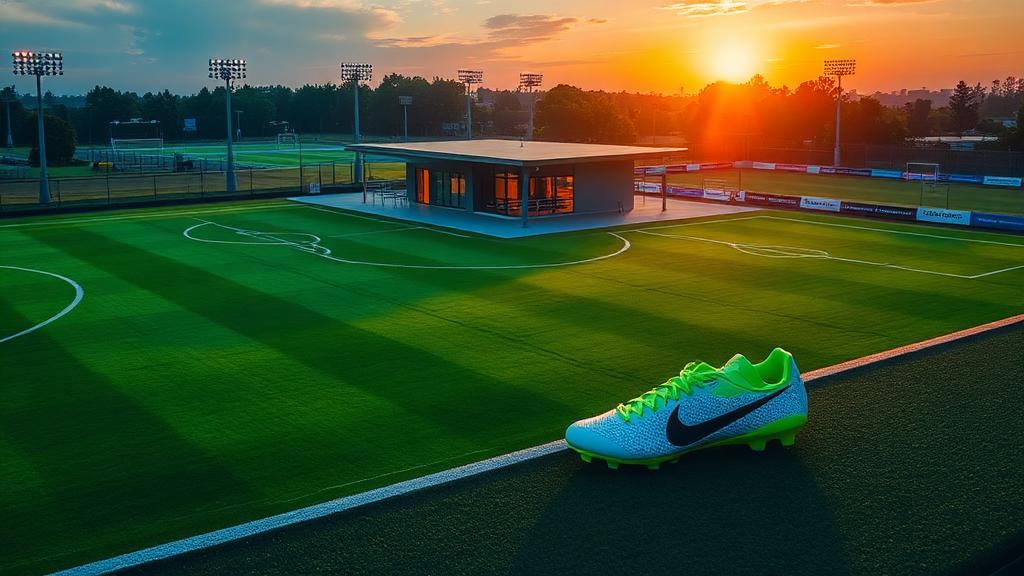
As an academy owner or facility operator, you face constant pressure to invest in the right equipment and infrastructure. The challenge lies not in recognizing the need for quality, but in navigating the vast market of options—from foundational gear to high-tech training aids—and making strategic decisions that yield a tangible return on investment, rather than just increasing your overhead.
Quick Answer
Investing in elite equipment and facilities is a strategic business decision that directly impacts player development, brand perception, and revenue. Prioritize functional durability and safety over aesthetics, align equipment with US Soccer age group standards (e.g., ball and goal sizes), and view technology as a tool for differentiation and new income streams. This approach, balancing performance with lifecycle cost, moves capital expenditure from a simple expense to a calculated investment in your academy's long-term success and market leadership.
The 5 most common mistakes (and how to fix them)
Mistake 1: Confusing "New and Shiny" with "High-Value"
What goes wrong: Many operators fall into the trap of prioritizing surface-level aesthetics over foundational quality. This manifests as purchasing brightly colored, uncertified pop-up goals that break after one season, choosing a turf field based on its vibrant green color rather than its G-Max rating and infill composition, or installing a scoreboard with flashy graphics that isn't weather-resistant. The immediate visual appeal wins over long-term performance and safety, leading to frequent replacement costs, increased risk of player injury, and operational downtime.
The fix: Shift your purchasing criteria from aesthetics to certified performance and durability. For critical infrastructure like turf, demand specifications on fiber type (monofilament vs. slit-film), infill material (SBR rubber, TPE, organic cork), shock pad inclusion, and G-Max test results to ensure player safety and longevity. For goals, look for SGMA (Sporting Goods Manufacturers Association) certification and construction from high-grade aluminum. A slightly more expensive, less flashy goal that lasts 10 years is a far better investment than a cheaper alternative that needs replacing every two years. Adopt a "total cost of ownership" mindset for every major purchase.
Mistake 2: A One-Size-Fits-All Approach to Player Equipment
What goes wrong: In an effort to simplify procurement, academies often standardize equipment in ways that hinder player development. This is most common with soccer balls, where a club might buy `soccer ball size 5` for every team to get a bulk discount, ignoring US Soccer mandates that U6-U8 players use a size 3 ball and U9-U12 players use a size 4. This negatively impacts technical development, as young players struggle with oversized equipment. Similarly, failing to educate parents on appropriate footwear for different surfaces—like the difference between firm ground cleats and specialized turf or indoor shoes like the `CR7 indoor football shoes` line—can lead to poor performance and even injury.
The fix: Create and enforce a clear, age-appropriate equipment standard that aligns with governing body regulations. Publish these standards on your website and communicate them during registration. For soccer balls, your inventory should reflect the needs of your entire player base, from size 3 to size 5. For footwear, provide clear guidance. Explain that using firm ground cleats on artificial turf can increase the risk of knee and ankle injuries and that for futsal or indoor training, a dedicated flat-soled shoe is non-negotiable for safety and ball control. This positions your academy as a knowledgeable authority focused on proper player development.
Mistake 3: Neglecting the "Invisible" Infrastructure
What goes wrong: The playing surface gets all the attention and budget, while critical supporting infrastructure is often overlooked until it fails. This includes inadequate field lighting (low foot-candles making evening play difficult and unsafe), poor drainage that renders grass fields unusable after a light rain, insufficient parking, and unkempt restroom facilities. A world-class field surrounded by a poor overall experience devalues your brand and can be a deciding factor for parents choosing between competitive academies. Large, multi-facility operations like `Seacoast United Soccer` understand that the total experience, from parking lot to pitch, defines their brand.
The fix: Develop a holistic facility master plan. When budgeting for a new field, the line items must include appropriate drainage systems, sports lighting that meets or exceeds IES (Illuminating Engineering Society) standards for the level of play, and accessible pathways. Budget for amenities: clean restrooms, adequate spectator seating (even if it's just quality aluminum bleachers), and a functional PA system. These "invisible" elements contribute directly to user experience, facility capacity (e.g., lighting enables more evening rental hours), and brand perception. A simple but powerful policy is requiring all players to wear `cleat guards` when walking through indoor common areas to protect floors and show respect for the facility.
Mistake 4: Viewing Modern Training Technology as an Unaffordable Luxury
What goes wrong: Academy owners often see technologies like GPS player trackers (Catapult, STATSports), automated video cameras (VEO, Trace), and interactive training walls (like TOCA or Rezzil) as exclusive tools for professional clubs or Division I programs. They perceive the upfront cost as prohibitive and fail to calculate the potential for return on investment. This leaves them reliant on purely subjective coaching feedback, unable to provide the data-driven insights that a growing number of competitive parents and players now expect.
The fix: Reframe technology as a revenue-generating asset and a marketing differentiator. A VEO camera, for example, isn't just for your top teams. The cost can be subsidized by offering game-film packages to all teams in the club. You can create "Performance Analytics" camps and clinics as a new revenue stream, using GPS data to show players their max speed, distance covered, and sprint counts. This objective data becomes a powerful tool for both player development and marketing, demonstrating a commitment to elite training methodologies. Start small with one or two cameras, prove the model, and then scale the program across the academy.
Mistake 5: Ignoring Lifecycle Management and Maintenance Costs
What goes wrong: An operator secures the capital for a new $750,000 turf field but allocates zero budget for its ongoing maintenance or eventual replacement. The field is not regularly groomed, the infill is not topped up, and seams are not repaired. As a result, the surface hardens, the G-Max rating falls to unsafe levels, and the field's lifespan is cut from a projected 10-12 years to just 6-7. No funds have been set aside for the next replacement, creating a massive, unexpected financial crisis down the line. This applies to everything from ball inflators to HVAC systems in an indoor facility.
The fix: Implement a formal Asset Management Plan. For every significant capital asset, create a schedule for routine, preventative maintenance and establish a "sinking fund"—a separate savings account where you deposit funds monthly or quarterly specifically for the asset's eventual replacement. For a turf field, this means budgeting annually for grooming, deep cleaning, and infill top-offs. Furthermore, calculate the replacement cost and divide it by the asset's expected lifespan in months. This monthly figure is what you should be setting aside. This disciplined financial planning turns a future crisis into a manageable, predictable business expense.
Equipment & Facility Standards Comparison by Age Group
| Age Group (US Soccer) | Ball Size | Goal Size (Max W x H) | Typical Playing Format | Key Equipment/Facility Focus |
|---|---|---|---|---|
| U6 - U8 | Size 3 | 6.5 ft x 18.5 ft | 4v4 (no goalies) | Portable, safe goals; clear field markings (cones or flat discs); focus on maximizing touches. |
| U9 - U10 | Size 4 | 6.5 ft x 18.5 ft | 7v7 | Durable size 4 balls; semi-permanent goals; introduction of proper keeper equipment (gloves). |
| U11 - U12 | Size 4 | 7 ft x 21 ft | 9v9 | Transition to larger, sturdy goals; quality training bibs for organization; introduction of basic agility equipment (ladders, hurdles). |
| U13 - U15 | Size 5 | 8 ft x 24 ft (Full Size) | 11v11 | Full-size, regulation goals; introduction of high-quality, durable `soccer ball size 5` training balls; access to full-size field. |
| U16 - U19 / Elite | Size 5 | 8 ft x 24 ft (Full Size) | 11v11 | Match balls (e.g., NFHS or FIFA certified); access to video analysis tech; GPS trackers; specialized training aids (rebounders, mannequins). |
How to apply this at your academy
- Conduct a Comprehensive Asset Audit. Create a detailed inventory of all major equipment and facility components (fields, goals, lighting, training aids). For each item, document its purchase date, current condition, expected lifespan, and projected replacement cost. This data is the foundation of your strategic investment plan and moves you from reactive purchasing to proactive asset management.
- Develop Tiered Program Standards. Not every player needs the same level of equipment. Define equipment and facility standards for each tier of your academy (e.g., recreational, travel, pre-academy, MLS NEXT/ECNL). A rec player may get a club-provided basic jersey, while an elite player's fees cover a full kit, bag, and access to advanced training technology. This transparently justifies fee structures and manages parental expectations.
- Build a Phased Capital Improvement Plan. Use your audit to prioritize investments. Rank potential projects using a matrix of Safety, Player Development Impact, Revenue Generation Potential, and Brand Enhancement. A safety-critical fix (e.g., repairing a broken goalpost) comes first. Next might be a high-impact, low-cost upgrade like purchasing correct ball sizes for all age groups, followed by a long-term project like securing funding for a lighting retrofit.
- Integrate Financial Planning with Your Operational Systems. Use your club management and scheduling systems to track more than just registrations. Analyze revenue-per-hour for each field to identify peak/off-peak times and inform pricing for rentals. Track equipment inventory and link it to program registration to automate purchasing forecasts. This data-driven approach provides the hard numbers needed to justify investment decisions to your board or financial partners.
Frequently asked questions
How can a smaller academy emulate the facility standards of a large club like Seacoast United Soccer on a budget?
Focus on quality over quantity. Instead of trying to maintain four mediocre grass fields, invest in making one or two exceptionally good. Pursue strategic partnerships with local school districts or municipalities to gain access to high-quality fields during off-hours. Prioritize a phased approach: start with excellent portable goals, then upgrade field markings, then save for a professional-grade surface. A well-maintained, correctly marked single field with quality goals presents a more professional image than a sprawling, neglected complex.
What is the real performance difference between a standard soccer ball size 5 and a FIFA Quality Pro certified ball?
The difference lies in consistency and performance under pressure. A FIFA Quality Pro ball has passed rigorous tests for weight, circumference, roundness, rebound, water absorption, and pressure loss. For an elite player, this means the ball flies truer, responds predictably off the foot, and doesn't become a water-logged "rock" in wet conditions. While a standard ball is fine for general training, using certified match balls for your top teams ensures the equipment is as reliable and consistent as the high-stakes environment demands.
Are specialized shoes like CR7 indoor football shoes a necessary expense for youth players?
This depends entirely on the playing surface and level of competition. For players frequently training on artificial turf or in futsal-specific programs, the right footwear is a matter of safety and performance, not branding. Turf shoes with small rubber nubs offer better traction and reduce stress on joints compared to firm-ground cleats. Flat-soled indoor or futsal shoes provide optimal grip and ball feel on hard courts. Mandating or strongly recommending appropriate footwear for specific surfaces is a sign of a knowledgeable and safety-conscious organization.
Why should our facility enforce the use of cleat guards indoors?
Enforcing a policy on `cleat guards` is a simple, low-cost measure with a high return. First, it protects your capital investment by preventing damage to expensive flooring in lobbies, hallways, and locker rooms. Second, it reduces liability by minimizing slip-and-fall risks on smooth surfaces. Finally, it instills a sense of discipline and respect for the facility among your players, reinforcing the idea that they are part of a professional organization. It is an operational detail that contributes significantly to facility longevity and culture.
When does investing in high-tech training equipment like VEO or GPS trackers make financial sense for an academy?
The investment makes sense at the intersection of competitive need, marketing differentiation, and revenue generation. If your top teams compete in leagues (e.g., Girls Academy, ECNL) where video analysis is standard for college recruiting and opposition scouting, it's a competitive necessity. You can make it financially viable by creating new, fee-based programs around the technology, such as "Player Performance Analysis" packages for individual players or offering game film downloads to parents for a subscription fee. It becomes a wise investment when it actively attracts and retains players by offering a tangible benefit they can't get at a competing club.
What are the most overlooked aspects of facility management that impact profitability?
Beyond the field itself, the most overlooked areas are lighting efficiency and schedule optimization. Retrofitting old metal-halide lights to modern LEDs can cut energy costs by 50-75%, a significant operational saving. Secondly, many facilities fail to maximize their revenue per hour. Use your scheduling systems to analyze usage patterns, implement dynamic pricing for rental slots (higher for prime time, lower for off-peak), and actively market unused time slots to local corporate leagues, other sports, or for birthday parties. These ancillary revenues can dramatically improve your bottom line.
Investing in your equipment and facilities is a direct investment in your brand, your players' development, and your business's financial health.