Quick answer: The football staff market is one of the least efficient hiring markets in professional sport. Clubs find coaches, physios and analysts through personal networks, and intermediaries capture a large share of the value. Football Department, a project I co-founded, grew from zero to more than 1,000 verified members in under four months by solving the trust problem first and the technology problem second. The playbook below applies to any two-sided network in sport.
The problem
When a club needs a fitness coach, a video analyst or a physiotherapist, the search usually runs through WhatsApp. Somebody knows somebody. It works, and it is also slow, opaque and geographically limited. On the other side, highly qualified staff at good clubs have no reliable way to be visible to sporting directors outside their own country.
Agents fill that gap, and for high-value moves they earn their fee. For staff roles the maths is less comfortable: the same intermediary economics get applied to positions where the margins do not justify them. The result is a market where both sides want a direct connection and neither has one.
What we built
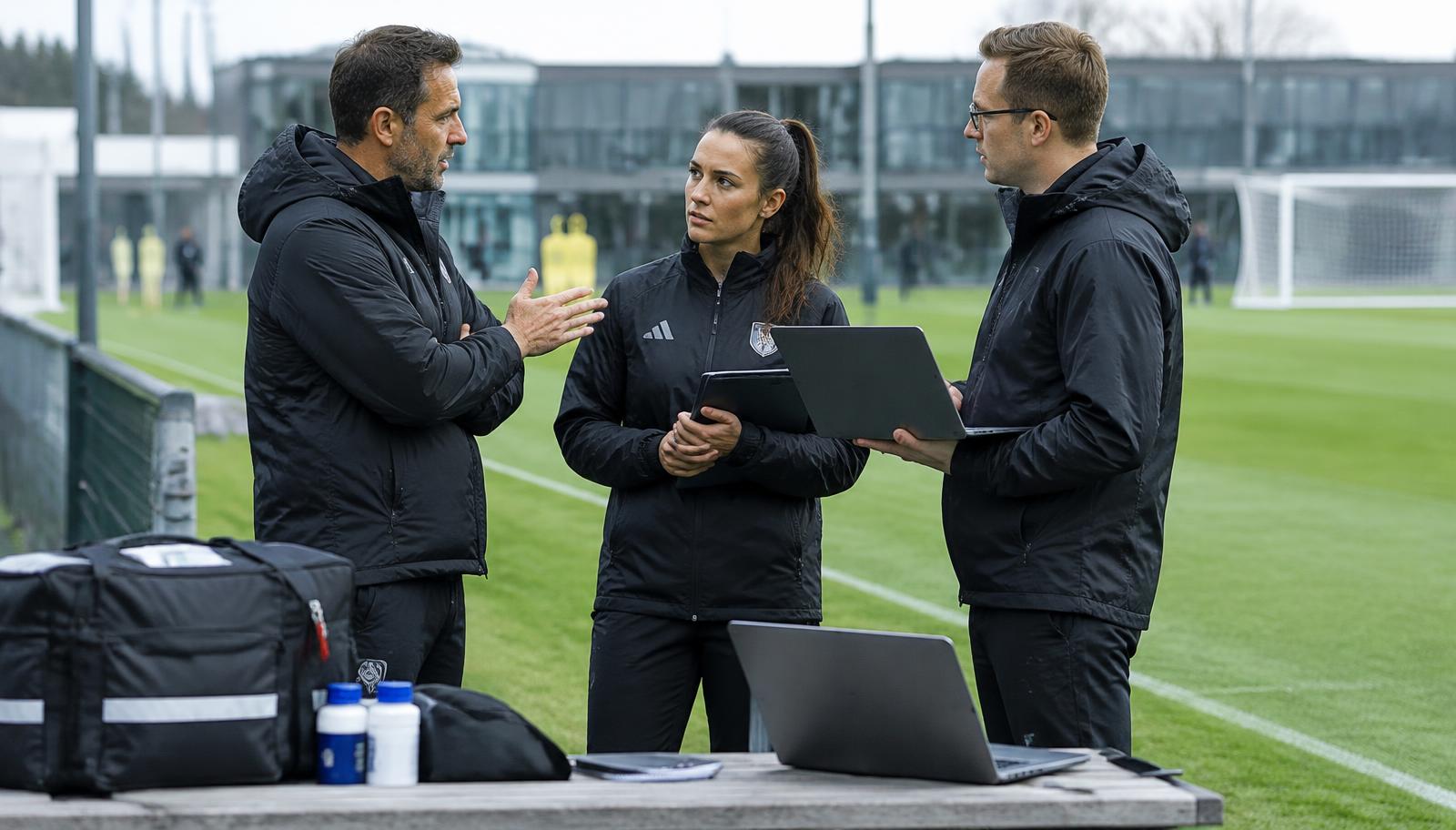
Football Department is a verified network connecting clubs with elite staff — coaches, physiotherapists, analysts, fitness and performance specialists. The founding principle was verification rather than volume: a small network of confirmed professionals is more valuable to a sporting director than a large directory of unverified profiles.
The response was faster than we expected. Within four months, membership passed 1,000 verified professionals, including people working at clubs such as Barcelona, Porto, Benfica, Al Nassr, Al Hilal, Dinamo Zagreb and New York Red Bulls. Interest came strongly from both sides, which is unusual — most two-sided networks have to subsidise one side for a long time.
Why it grew so fast: five transferable lessons
1. Pick a market with real friction, not a market with no product
There was no shortage of job boards. There was a shortage of trust. When a network solves a friction people already feel weekly, you do not need to educate the market — you need to be findable.
2. Start with the scarce side
In staff hiring, verified quality professionals are scarcer than open roles. We recruited that side first, personally, one conversation at a time. The first 100 members were not acquired through marketing; they were invited. Those 100 made the next 900 possible.
3. Verification is the product
Anyone can build a directory. The defensible asset is that every profile has been checked. We were slower and smaller than we could have been because of it, and that is precisely why sporting directors engaged.
4. Referral is the only affordable channel at launch
Professional networks grow along existing relationships. A verified member introducing two peers is worth more than any paid campaign, because the introduction carries the verification implicitly. Make referring easy, obvious and slightly flattering.
5. Manual before automated
For the first months, matching was human. Understanding what a sporting director actually means when they ask for "a modern analyst" cannot be learned from a form. Automating a process you do not yet understand produces an efficient version of the wrong thing.
The launch sequence we used
| Phase | Goal | Main activity |
|---|---|---|
| Weeks 1–2 | Validate the pain | Direct conversations with clubs and staff, no product |
| Weeks 3–6 | Seed the scarce side | Personal invitations to a founding cohort |
| Weeks 6–10 | Prove the match | Manual introductions, document what works |
| Weeks 10–16 | Open the referral loop | Members invite verified peers, light structure added |
What this means for academies and clubs
Most youth academies will never build a staff network, but the structural lesson applies directly to hiring. Academies compete for the same limited pool of good coaches, and the ones who win are the ones who treat recruitment as an ongoing relationship activity rather than an emergency in August.
- Keep a live list of coaches you would hire if a slot opened, and speak to them twice a year.
- Verify properly: qualifications, safeguarding clearance, and a reference from someone who has watched them coach.
- Make your academy worth joining — clear development pathway, reliable payment, and a season plan — because good coaches choose between offers.
- Treat every departing coach as a future rehire or referrer.
Staffing cost is also one of the six numbers that decide academy profitability, covered in the academy metrics guide.
Frequently asked questions
How do professional clubs usually hire coaching staff?
Predominantly through personal networks and intermediaries rather than open advertising, which is why well-qualified staff outside those networks struggle to be seen.
Why do two-sided networks fail?
Most fail by launching both sides at once with nobody on either. Seeding the scarce side first, manually, is slower and far more likely to work.
How long should manual matching continue?
Until you can write down the matching rules accurately. If you cannot describe the decision in a checklist, software will only scale your guesswork.
What makes a professional network defensible?
Verification and reputation, not features. Both compound over time and neither can be copied by a competitor overnight.
Can a youth academy use the same approach to recruit coaches?
Yes. Build a small verified bench of coaches you would hire, maintain the relationships year-round, and you will never make a panic hire in preseason again.